 admin@prodriver.in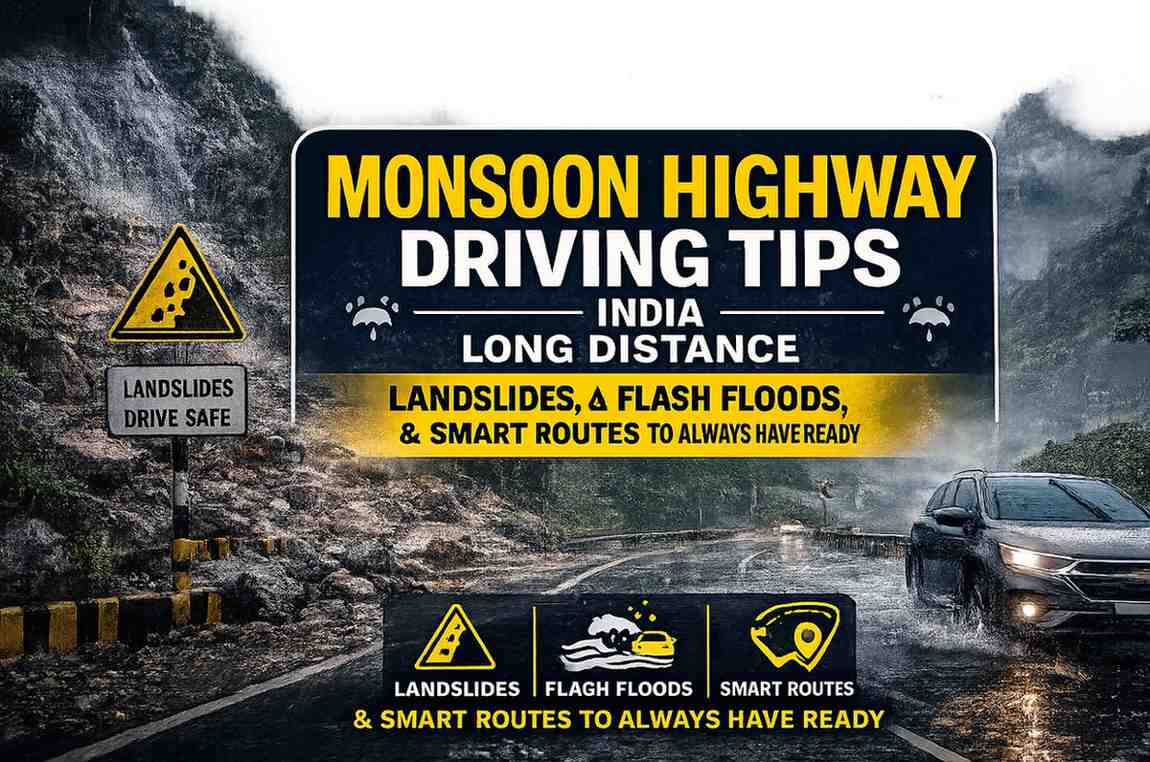
Long-distance highway driving during India’s monsoon is a different category of challenge from urban monsoon driving. The monsoon highway driving tips India long-distance journeys require are about managing not just wet roads but a fundamentally altered landscape: sections of national highway that wash away overnight, ghat passes that close for landslide clearance, river bridges that become inaccessible when water levels rise, and stretches of road that were clear when you departed but are blocked 200 km later when you arrive.
The monsoon highway driving tips India long-distance experts emphasize are built around one fundamental principle: information before departure and flexibility throughout the journey. The driver who researches routes, has alternate options ready, monitors weather en route, and is genuinely willing to stop and wait is the driver who arrives safely regardless of what the monsoon throws at a particular stretch of highway.
According to the National Disaster Management Authority of India, landslide-related road closures affect over 11,000 km of Indian highways every monsoon season. Flash floods temporarily close thousands of additional kilometers. The monsoon highway driving tips India long-distance planning framework in this guide directly addresses these seasonal infrastructure realities.
Pre-Departure Planning: The Foundation of Monsoon Highway Driving Tips India Long Distance
Check IMD Forecasts for your entire route.
The India Meteorological Department’s (IMD) 48-hour forecast shows district-level rainfall predictions across India. Before any monsoon long-distance journey, check IMD’s forecast for every district your route passes through — not just your origin and destination. Monsoon highway driving tips India long distance pre-departure rule: If any district on your route shows a heavy (64–115 mm) or extremely heavy (>115 mm) rainfall forecast, either delay the journey by 24 hours or have a confirmed alternate route that avoids that district.
Know Which Highway Sections Are Historically Vulnerable
Certain sections of Indian National Highways are well-documented as monsoon hazards:
- NH48 and NH66 through Western Ghats (Mumbai–Goa, Bengaluru–Mangalore sections): Landslide and washout risk July–September.
- NH07 and NH39 through the Northeastern Himalayas: Extreme landslide risk; frequently closed for days at a time.
- NH10 (Siliguri–Gangtok, Sikkim): Annual flooding and landslide events.
- NH544 Madurai–Kochi through the Palakkad area: Flash flood risk in heavy rainfall years.
Pre-loading these known-risk sections into your monsoon highway driving tips for India long-distance planning means you have alternate routes ready without needing to research under pressure.
Plan Two Alternate Routes Before Departure
For any long-distance monsoon journey, map three routes: primary, alternate, and emergency (minimal distance to a safe overnight stop). Monsoon highway driving tips for India’s long-distance route planning: enter all three into Google Maps offline maps before departure. Cellular connectivity is unreliable in many Indian highway corridors in heavy rain.
On-Road Awareness: Monsoon Highway Driving Tips India Long Distance
Recognise Landslide Warning Signs
Before a major landslide, warning signs often appear that experienced highway drivers learn to recognize. Monsoon highway driving tips India long-distance landslide awareness indicators:
- Fresh soil or rock debris on the road shoulder (small precursor slides often precede major events)
- Unusual water seepage through embankments or road cuts
- Road surface cracking or subsidence perpendicular to the direction of travel
- Trees on the hillside leaning unusually or recently displaced soil at the base
If you observe these signs on a wet highway section during active heavy rain, slow dramatically and be prepared to reverse if necessary. Do not rush through the monsoon highway. Driving tips in India for long distances approach potential landslide zones with always heightened caution.
Flash Flood Recognition and Response
Flash floods on Indian highways can develop within 15–30 minutes of heavy upstream rainfall—even when the road you are on is relatively clear. Monsoon highway driving tips in India: long-distance flash flood response:
- Watch river levels under bridges as you cross—rising rapidly (visible change in minutes) indicates upstream flooding
- Never stop on a bridge during heavy rain
- If you see water rapidly spreading across the road from a river or culvert direction, turn around immediately
- A roaring or rushing sound upstream in a dry nallah (seasonal stream) during rain is an emergency warning to move to higher ground immediately
Use High Beam With Care in Rain
High beams in rain reflect off water droplets and can paradoxically reduce forward visibility through glare. Monsoon highway driving tips India’s long-distance lighting strategy: use dipped headlights with fog lights in heavy rain on highways. Only use high beams in clear sections between heavy rain cells where visibility genuinely improves with the longer beam.
Stop and Rest Rather Than Push Through Fatigue
Long monsoon highway drives are significantly more physically and mentally demanding than dry-weather driving. The concentration required for wet roads, reduced visibility, and hazard assessment is exhausting. Monsoon highway driving tips India long-distance fatigue management: plan rest breaks every 2 hours, use highway dhabas, petrol stations, or rest areas, and do not push through fatigue. Tiredness combined with driving in monsoon conditions is one of the most dangerous combinations on Indian roads.
Emergency Preparedness: Monsoon Highway Driving Tips India Long Distance
Every long-distance monsoon journey should include preparation for an unplanned overnight stop or extended delay. Monsoon highway driving tips for India: long-distance emergency kit additions (beyond the standard urban kit): extra water (2 liters per person), energy bars or snacks, warm layers (Ghat driving at night in rain is cold), spare cash (ATMs are unavailable in remote highway areas), and a downloaded offline map of the region.
Have the following numbers saved in your phone:
- NHAI highway helpline: 1033
- State Disaster Response Force of states on your route
- Your breakdown/roadside assistance provider (Maruti, Hyundai, ACKO, or insurance provider assistance)
Frequently Asked Questions
Q1. What is the most dangerous time to drive on Indian ghat highways in the monsoon? Between midnight and 6 AM during active rainfall. Visibility is at its minimum, road clearing crews are inactive, and fresh landslide debris may not yet be marked. Monsoon highway driving tips in India: long-distance night driving rule: plan itineraries to clear major ghat sections before dark during monsoon.
Q2. How do I check if a specific highway section is open before traveling? Check NHAI’s website and the NHAI Highway helpline (1033), state PWD websites, and Twitter/X hashtags for the specific highway (e.g., #NH66, #ShiradiGhat) for real-time updates. Monsoon highway driving tips in India and long-distance information sources are social media and state disaster management portals—often more current than official websites.
Q3. Should I stop overnight if caught in extremely heavy rain mid-journey? Absolutely, without hesitation. A night at a highway dhaba or small-town hotel is infinitely preferable to continuing in conditions where road hazards cannot be seen or avoided. Monsoon highway driving tips India long-distance professional advice: no destination is worth the risk of continuing in zero-visibility or active landslide-zone conditions.
Q4. Are highway expressways safer than older NHs in monsoons? Modern expressways (Mumbai-Pune Expressway, Delhi-Meerut, and NICE Road in Bengaluru) have better drainage, higher-quality surfaces, and better crash barriers—making them generally safer in rain. However, expressways can still aquaplane at high speeds and have less route flexibility. Monsoon highway driving tips India long distance: Use expressways where available, but respect reduced speed limits in rain regardless.
Q5. How do I prepare the car specifically for a long monsoon highway journey? Complete the full car checklist from Article 3, add extra windshield washer fluid (highway grime consumption is high), check that all tires (including the spare) are at the correct pressure, ensure the phone mount and offline navigation are set up, and confirm your breakdown assistance contact before departure. This preparation is the vehicle-preparation complement to monsoon highway driving tips, India long-distance routes, and situational planning.
Conclusion
Monsoon highway driving tips in India for long-distance journeys revolve around three principles: information (know the route hazards before you leave), preparation (car, emergency kit, alternate routes), and judgment (the wisdom to stop when conditions exceed safe parameters). The best monsoon highway drivers in India are not those who have the fastest cars or the most driving experience — they are the most informed and the most disciplined about the limits their conditions impose.
Use the monsoon highway driving tips long-distance framework in India as a pre-departure checklist for every long journey from July to September. Arrive later if necessary. Arrive safely always.