 admin@prodriver.in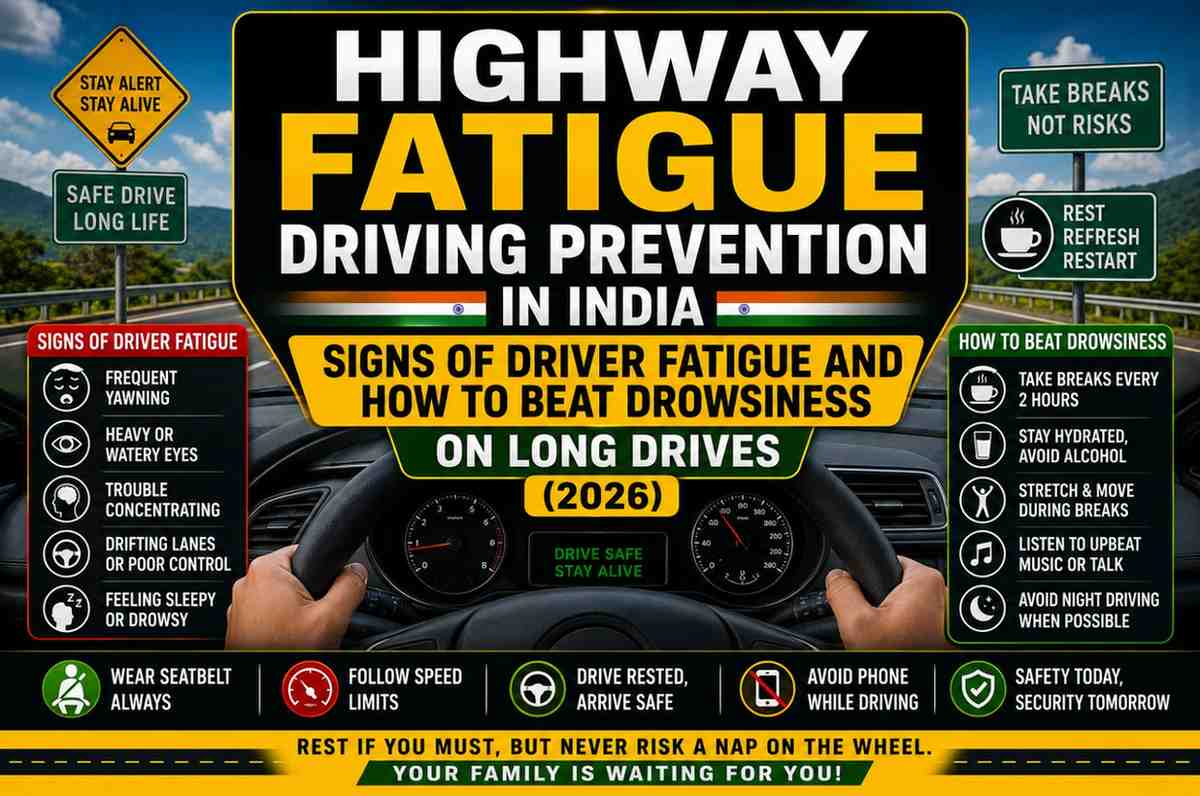
Driver fatigue is responsible for an estimated 25–30% of fatal highway accidents in India. It is invisible, it is gradual, and it is dangerously deceptive—because the moment you are most impaired by drowsiness is often the moment you feel least aware of how impaired you are. Highway fatigue driving prevention in India is therefore not just about knowing when you feel tired. It is about understanding fatigue, recognizing its early signs, and having a system in place to manage it before it becomes dangerous.
This comprehensive guide on highway fatigue driving prevention in India covers the science of driver fatigue, the warning signs most drivers miss, and the practical strategies that experienced Indian long-distance drivers use to stay alert and arrive safely.
Why Highway Fatigue is So Dangerous in India
Highways create the perfect conditions for driver fatigue. The monotonous environment—consistent road, consistent speed, and low demands on active decision-making—allows the brain to begin disengaging from the task of driving. This is called highway hypnosis, and it is a real neurological phenomenon.
Highway fatigue-driving prevention India requires understanding these specific Indian highway factors:
- Long distances between cities — Delhi to Mumbai is 1,400 km. Even at good highway speeds, this is 16–18 hours of driving. No single driver should attempt this without a break plan.
- Night driving culture — many Indian long-distance drivers drive through the night to avoid traffic. This is one of the most dangerous periods for fatigue (2am–5am is when human alertness is naturally at its lowest).
- Heat-induced fatigue — Indian summer temperatures of 40–46°C create physiological fatigue even before you are drowsy. Heat accelerates fatigue dramatically.
- Post-meal drowsiness—heavy Indian highway meals (full thali at a dhaba) significantly increase post-meal drowsiness. This is a specific highway fatigue driving prevention India concern.
- Limited rest area infrastructure — not all Indian highways have adequate, safe rest stops, making planned breaks difficult on some routes.
Early Warning Signs of Driver Fatigue — Highway Fatigue Driving Prevention India
Highway fatigue driving prevention in India starts with recognition. Most drivers respond only to severe drowsiness—but by that point, impairment is already significant. These are the early signs you must act on immediately:
Stage 1 — Early Warning Signs (Act Now)
- Frequent blinking or difficulty keeping eyes focused
- Mind wandering or difficulty concentrating on driving
- Yawning repeatedly (more than 3–4 times in 10 minutes)
- Missing road signs or exits that you noticed in time before
- Slight wandering within your lane
Stage 2 — Serious Warning Signs (Pull Over Immediately)
- Micro-sleeps — brief (1–3 second) uncontrolled sleep episodes you may not even notice
- Head nodding or jerking awake
- Difficulty remembering the last few kilometres driven
- Drifting across lane markings
- Slowed reaction to traffic changes ahead
Stage 3 — Critical Danger (Emergency)
- Uncontrolled lane drift
- Inability to focus vision
- Driving on rumble strips (the vibrating textured strips on the road edge)
- Feeling genuinely confused about your location
Highway fatigue driving prevention India rule: If you experience any Stage 2 sign, pull over at the next possible opportunity. Not the next rest area — the next shoulder, service lane, or any safe stopping point. Stage 2 fatigue means you are already significantly impaired.
Proven Highway Fatigue Driving Prevention India Strategies
Strategy 1 — The 2-Hour Rule (Non-Negotiable)
The single most effective highway fatigue-driving prevention India strategy is simple: stop every 2 hours for a minimum of 15 minutes. Get out of the car. Walk around. Stretch. Use the restroom. Drink water.
The 2-hour rule is not a suggestion — it is the recommendation of every road safety authority in India, including MoRTH and NHAI. Research shows that driving performance deteriorates measurably after 90–120 minutes of unbroken highway driving, even in alert, well-rested drivers.
Strategy 2 — Pre-Trip Sleep Planning
Highway fatigue driving prevention in India begins the night before. Sleep deprivation and highway driving are a dangerous combination that many Indian drivers underestimate. Research shows that 18 hours without sleep produces impairment equivalent to a blood alcohol level of 0.05% — legally impaired in most countries.
Before a long highway drive:
- Get 7–8 hours of sleep the night before
- Do not depart on a long drive if you slept less than 5 hours
- If you must drive on limited sleep, reduce distance targets and increase stops
Strategy 3 — Avoid High-Risk Driving Hours
Highway fatigue driving prevention in India requires understanding the body’s natural sleep cycle. The human body has a strong natural sleep drive during two daily periods:
- 2am to 6am — the primary circadian dip. Driving during these hours dramatically increases fatigue-related accident risk, even if you have slept adequately.
- 1pm to 4pm — the post-lunch dip. Driving after a meal during this period increases drowsiness significantly.
Plan highway driving to avoid starting these periods behind the wheel on long stretches.
Strategy 4 — Power Nap Strategy
The power nap is one of the most effective yet underused highway fatigue driving prevention tools in India. A 20-minute nap in your car at a highway rest stop delivers significant alertness restoration — more than coffee in most scientific studies.
How to use it: Pull into a rest area or service station. Recline your seat. Set a 20–25 minute alarm. Sleep. The alarm prevents you from entering deep sleep, which would cause grogginess on waking.
Strategy 5 — Caffeine — Correct Use
Coffee and tea do provide a genuine, though limited, alertness boost. However, highway fatigue driving prevention in India requires understanding caffeine’s limitations:
- Caffeine takes 20–30 minutes to enter the bloodstream — not immediate
- Effects last 2–4 hours at most
- Caffeine tolerance means regular coffee drinkers get progressively less effect
- Caffeine masks the sensation of fatigue without addressing the underlying impairment
- Never use caffeine as a substitute for stopping—use it as a bridge to your next planned stop, not as permission to continue indefinitely
Best practice: Drink a coffee, then take a 20-minute power nap. By the time you wake, the caffeine is active, and you have had restorative sleep. This combination is significantly more effective than either alone.
Strategy 6 — Cool the Car and Open Windows
A warm car cabin is one of the most powerful highway fatigue driving prevention triggers in India. Heat induces physiological fatigue directly. Keep your AC running, maintain the car at 20–22°C, and periodically open windows to allow fresh air circulation.
Strategy 7 — Share Driving Duties
On long highway drives, driving in shifts of 2 hours with a co-driver is the gold standard of highway fatigue driving prevention in India. Each driver rests while the other drives. This approach allows consistent coverage of long distances without fatigue-related risk building up.
If you do not have a co-driver, reduce your daily driving target to 400–500 km maximum for a single person on Indian highways.
Highway Fatigue Driving Prevention India — Stop Locations
Plan your stops before you leave using your navigation app. On major Indian highways, rest infrastructure in 2026 includes the following:
- NHAI Wayside Amenities — standardized rest facilities at regular intervals on major expressways. Include fuel, food, toilets, and sometimes rest rooms.
- Petrol Stations—widespread on national highways, useful for quick stops, coffee, and refreshment
- Dhabas—on older national highways, dhabas provide food and often space to park and rest
- Highway rest areas — designated stopping bays on expressways with shade, seating, and basic facilities
FAQs — Highway Fatigue Driving Prevention India
Q1. How often should I stop on a long highway drive in India? Every 2 hours or every 150–200 km, whichever comes first. Stops should be at least 15 minutes and ideally involve walking and refreshment.
Q2. Is coffee enough to prevent driver fatigue on long Indian highway drives? No. Coffee is a temporary measure that delays — but does not prevent — fatigue. The only genuine treatment for fatigue is sleep. Use the power nap + coffee combination for best short-term effect.
Q3. What time of day is safest for highway driving in India? 6am–12pm and 3pm–7pm are the periods with the lowest fatigue risk. Avoid driving between 2am and 6am and limit driving after heavy afternoon meals between 1pm and 4pm.
Q4. Can I rely on rumble strips to wake me if I doze off? No—rumble strips are the last line of defense, not a fatigue management strategy. By the time you hit a rumble strip, you have already crossed into another lane or the road shoulder. Highway fatigue driving prevention in India is about stopping before you reach that point.
Q5. How many hours of sleep do I need before a long highway drive? Minimum 6 hours, ideally 7–8. Do not begin a highway drive of over 300 km on less than 5 hours of sleep. The risk is too high.
Conclusion
Highway fatigue driving prevention in India is simple in principle and challenging in practice—because fatigue is insidious, and the pressure to reach a destination is real. But no schedule, no deadline, and no urgency justify driving when you are dangerously fatigued.
Stop every 2 hours. Sleep properly the night before. Know the warning signs. Use the power nap. Share the driving. These are not inconveniences — they are the habits that bring you home.
Share this guide with everyone who drives long distances in India. Driver fatigue is preventable. Every conversation about it saves lives.
External Links: