 admin@prodriver.in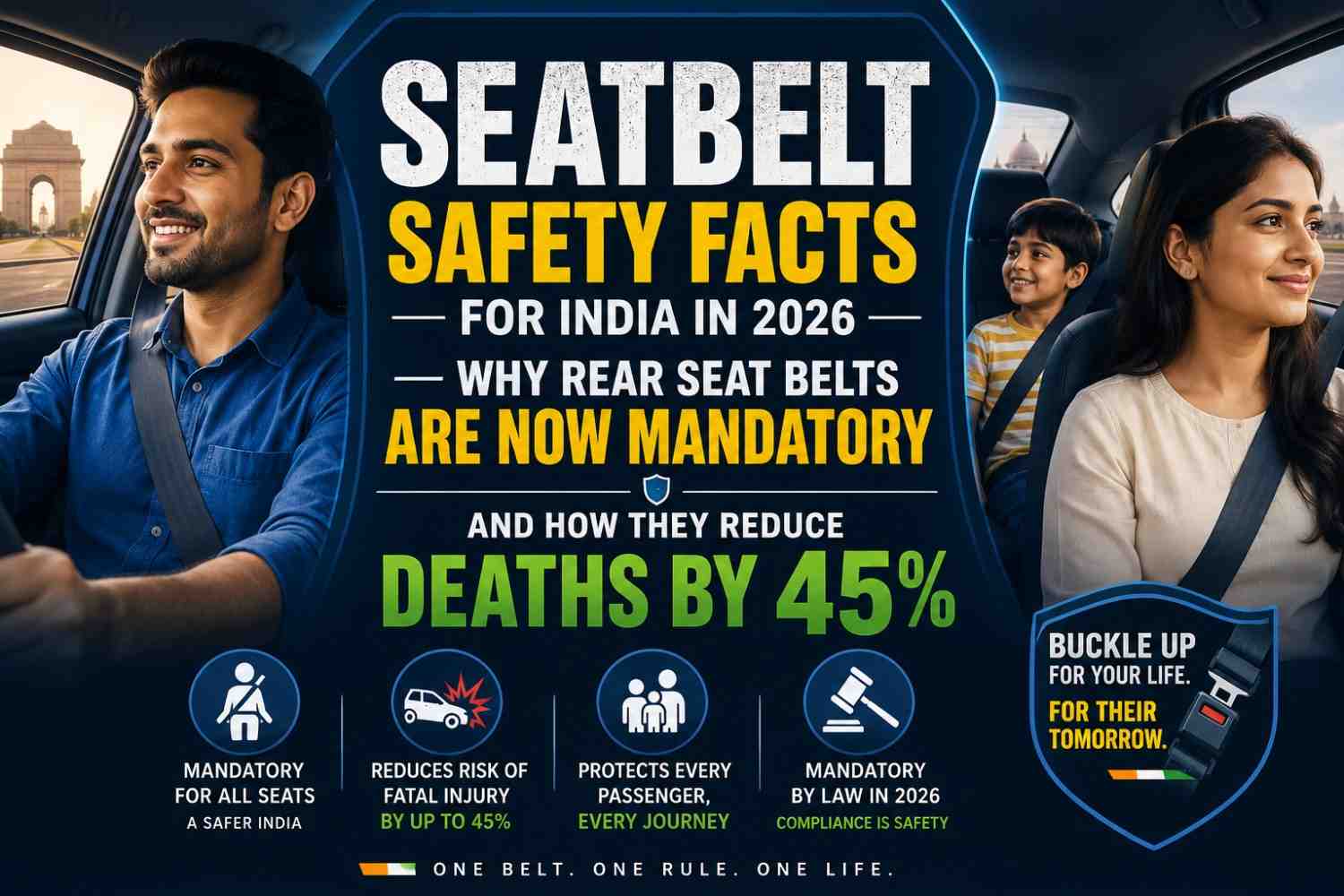
The seatbelt is the most effective road safety device ever invented. Yet in India, millions of people still choose not to wear one—particularly in rear seats. The seatbelt safety facts for India in 2026 make a compelling, evidence-based case for why this single daily decision is the most important safety choice you make every time you get in a vehicle.
Seatbelt safety facts for India in 2026 are backed by global crash data, Indian accident investigations, and the motor vehicle amendments that now make rear seatbelt use a legal requirement. In 2022, the tragic death of Cyrus Mistry—former Tata Group chairman—in a vehicle’s rear seat without a seatbelt shocked India into serious national conversation about rear passenger safety. His death was one of the most high-profile illustrations of what the seatbelt safety facts for India 2026 have been trying to communicate through data for years.
In this complete guide to seatbelt safety facts in India 2026, we cover the physics of crash protection, the data on death reduction, rear seatbelt law, common myths, and the simple habit that costs nothing but can save your life.
The Physics of Seat Belt Protection
Seatbelt safety facts in India 2026 begin with physics—because understanding how a belt saves your life makes the decision to wear one much easier.
In a collision at 60 km/h, a vehicle decelerates from 60 to 0 in approximately 0.1 seconds. But without a seatbelt, your body continues traveling at 60 km/h—the original speed—until it hits the dashboard, windshield, or steering wheel.
The force of impact is calculated by Newton’s Second Law: Force = Mass × Acceleration. In a 60 km/h collision, a 70 kg unbelted person impacts with a force equivalent to being hit by approximately 3.5 metric tons. No human body can withstand this.
A seatbelt works by:
- Spreading the impact force across the strongest parts of the body — the chest, shoulder, and pelvis
- Extending the stopping time from 0.1 seconds to 0.2–0.3 seconds—reducing peak force significantly
- Preventing secondary impact — stopping occupants from hitting the interior or being ejected
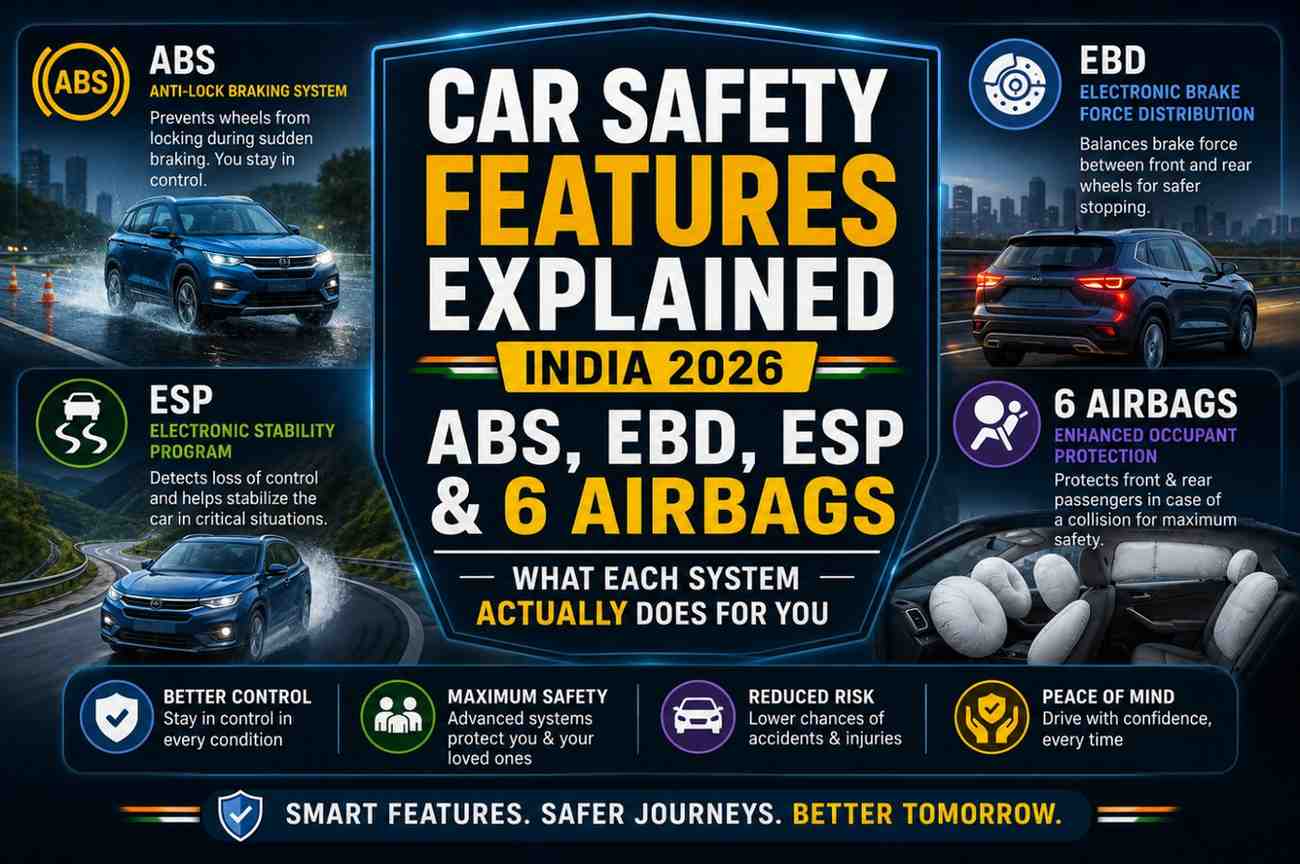
- Positioning occupants correctly for airbag deployment (airbags are designed to work WITH seatbelts, not instead of them)
Key Seatbelt Safety Facts in India 2026: The Data
The most important seatbelt safety facts India 2026 is derived from decades of crash research:
- Seatbelts reduce the risk of death in a crash by 45–50% for front-seat occupants
- Seatbelts reduce the risk of death for rear-seat passengers by 25–75% depending on crash type
- An unbelted rear passenger in a frontal crash becomes a projectile—hitting the front seat with up to 35 times their body weight in force
- In India, 50,000+ lives per year could be saved if all vehicle occupants wore seatbelts
- Of all road accident fatalities in India, approximately 35–40% of car occupants were not wearing seatbelts
- The risk of serious injury is 4 times higher for unbelted occupants vs belted occupants in the same accident
The Cyrus Mistry Case and What It Changed
No discussion of seatbelt safety facts in India in 2026 is complete without acknowledging the Cyrus Mistry incident.
In September 2022, Cyrus Mistry, former chairman of Tata Sons, died in a car crash on a Mumbai-Ahmedabad highway. He was seated in the rear seat without a seatbelt. The car was traveling at high speed when it hit a road divider. Front seat passengers who were wearing seatbelts survived with injuries.
The case directly prompted the Ministry of Road Transport and Highways to issue mandatory seatbelt regulations for all vehicle seats—front and rear—and initiated a national awareness campaign on rear seatbelt use. It is the single most influential data point in seatbelt safety facts in India 2026 public discourse.
Rear Seat Belt Law in India 2026
A critical component of seatbelt safety facts India 2026 in the legal domain:
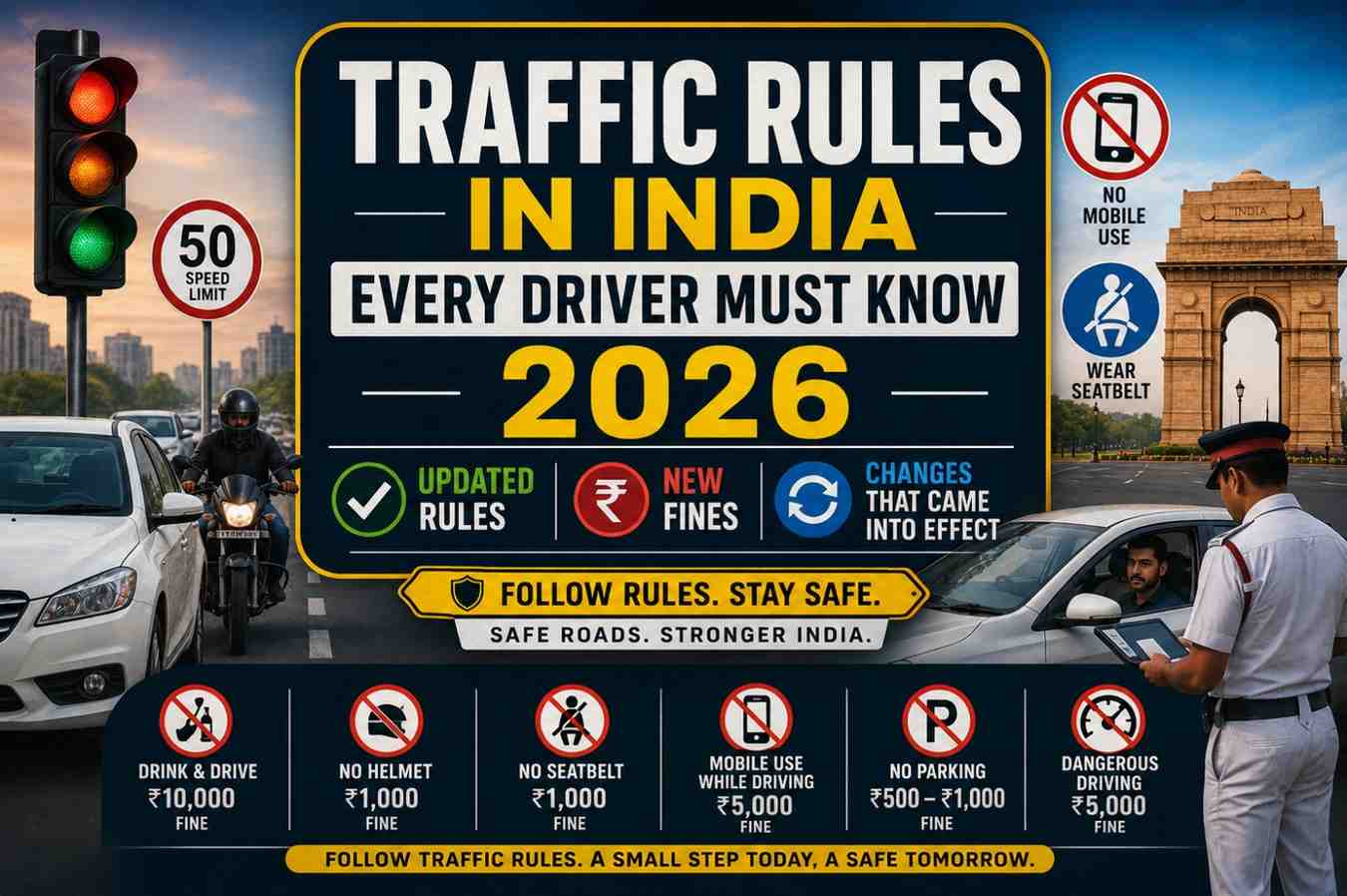
The Law: Under the Central Motor Vehicles Rules (amended), wearing a seatbelt is mandatory for all occupants in all seats — front and rear — in a motor vehicle.
Penalty for non-compliance:
- Fine: ₹1,000 for the vehicle owner/driver if any passenger (including in the rear) is not wearing a seatbelt
- In 2026, many states, including Delhi, Maharashtra, Tamil Nadu, and Karnataka have activated enforcement cameras at major intersections and highways
Vehicle requirements: Under Bharat NCAP norms updated for 2026, all new passenger vehicles sold in India must have the following:
- Front seatbelts with pre-tensioners and load limiters
- Rear seatbelts (lap + shoulder belts, not just lap straps)
- Seatbelt reminders for all seating positions (not just driver)
Common Seatbelt Myths Busted by Seatbelt Safety Facts India 2026
Myth 1: “I only travel short distances—belts are unnecessary.” Fact: Over 50% of serious accidents occur within 15 km of the driver’s home. Familiarity with local roads creates complacency—one of the most dangerous combinations. Distance does not reduce collision physics.
Myth 2: “It’s safer to be thrown clear in an accident.” Fact: This is one of the most deadly myths addressed by seatbelt safety facts in India 2026. Being “thrown clear” means being ejected from the vehicle at speed—typically resulting in death from secondary impact with the road, barriers, or other vehicles. Ejection fatality rates are approximately 8 times higher than belted occupant fatality rates in the same accident.
Myth 3: “The airbag will save me without a seatbelt.” Fact: Airbags are engineered to deploy and cushion a belted occupant moving at a controlled, predictable trajectory. An unbelted occupant may have already moved significantly from their seat by the time the airbag deploys—meaning the bag hits them at a different angle and speed. An airbag without a seatbelt can actually worsen injuries to unbelted occupants.
Myth 4: “Rear passengers don’t need belts in slow city traffic.” Fact: At 40 km/h—typical city traffic—an unbelted rear passenger in a sudden stop hits the front seat with approximately 1.5 tonnes of force. Serious spinal, chest, and head injuries occur at these speeds.
Myth 5: “Pregnant women shouldn’t wear seatbelts.” Fact: This is dangerously incorrect. Pregnant women should always wear seatbelts, with the lap belt positioned below the abdomen (across the hips/pelvis) and the shoulder belt between the breasts and over the shoulder. An unbelted pregnant woman in a crash is at severe risk—as is the unborn child.
How to Wear a Seatbelt Correctly
Seatbelt safety facts India 2026 also includes correct usage—because an incorrectly worn belt reduces protection:
Shoulder belt:
- Must cross the chest diagonally from shoulder to hip
- Should not be placed behind the back or under the arm (both eliminate protection)
- Must lie flat against the chest and shoulder—not twisted
Lap belt:
- Must lie flat across the hips/pelvis — not across the soft abdomen
- The belt buckle must be properly locked (test with a firm tug after buckling)
Seat positioning:
- The seat must be positioned so that the shoulder belt doesn’t cut across the neck (adjust seat height or use a seatbelt adjuster clip)
- The backrest should be relatively upright—reclining too far increases ejection risk
Seatbelt Safety for Children — Critical Seatbelt Safety Facts India 2026
Children require specific seatbelt safety measures:
- Children under 4 years: Rear-facing child seat mandatory
- Children 4–8 years or under 145cm tall: Forward-facing child seat or booster seat
- Children 8–12 years: Booster seat with adult seatbelt
- Children under 12: Should never sit in the front seat
- Never hold a child on your lap in a moving vehicle—in a crash, the child becomes a projectile with the full weight of an adult crushing them
The Motor Vehicles (Amendment) Act 2019 mandates child restraint systems for children under 4. Enforcement is increasing across major Indian cities in 2026.
FAQs: Seatbelt Safety Facts India 2026
Q1: What are the most important seatbelt safety facts for India 2026 that every driver should know? A: The three most critical seatbelt safety facts India 2026: belts reduce death risk by 45–50% for front occupants; rear passengers without belts become projectiles that can kill front passengers; and airbags are designed to work with belts, not replace them.
Q2: Are rear seatbelts now mandatory under the seatbelt safety facts India 2026 law? A: Yes. Under the Central Motor Vehicles Rules, all occupants in all seats must wear seatbelts. The fine for non-compliance is ₹1,000, charged to the driver/owner. AI enforcement cameras are being deployed across major cities and highways.
Q3: What do seatbelt safety facts in India 2026 say about airbags replacing seatbelts? A: Airbags do not replace seatbelts. Airbags are supplemental restraint systems designed to work alongside seatbelts. An unbelted occupant interacts with a deploying airbag at an uncontrolled angle and trajectory—which can worsen injuries rather than prevent them.
Q4: How do seatbelt safety facts in India 2026 address very short trips? A: More than 50% of serious accidents occur within 15 km of the driver’s home. Short trips are not low-risk trips. Seatbelts must be worn for every trip, regardless of duration or distance.
Q5: Do seatbelt safety facts Does India 2026 apply differently for pregnant passengers? A: Pregnant women should always wear seatbelts. The lap belt goes below the abdomen across the hips; the shoulder belt crosses between the breasts and over the shoulder. Never remove the seatbelt during pregnancy — the risk from an unbelted crash is far greater than any discomfort.
Conclusion
Seatbelt safety facts in India 2026 make an overwhelming, irrefutable case: the seatbelt is a 2-second action that reduces your chance of death in a road accident by nearly half. It costs nothing, requires no technology, and is available in every vehicle built in the last three decades.
Cyrus Mistry’s death reminded India that status, wealth, and vehicle quality cannot substitute for a seatbelt. The same seatbelt safety facts for India 2026 that apply to the rear seat of a luxury sedan apply equally to the rear seat of an economy hatchback. Physics doesn’t care about the brand of your car.
Wear your seatbelt every time. Make every passenger wear theirs every time. Start that habit today — and make it the one road safety action you never compromise on.
External Links
- https://morth.nic.in/seatbelt-safety — MoRTH: Seatbelt Safety India
- https://www.who.int/news-room/fact-sheets/detail/road-traffic-injuries — WHO: Seat Belts and Child Restraints
- https://www.nhtsa.gov/vehicle-safety/seat-belts — NHTSA: Seat Belt Safety Research USA
- https://parivahan.gov.in — Parivahan: Motor Vehicles Amendment Act Penalties
- https://www.globalncap.org — Global NCAP: Crash Test Seatbelt Performance Data