 admin@prodriver.in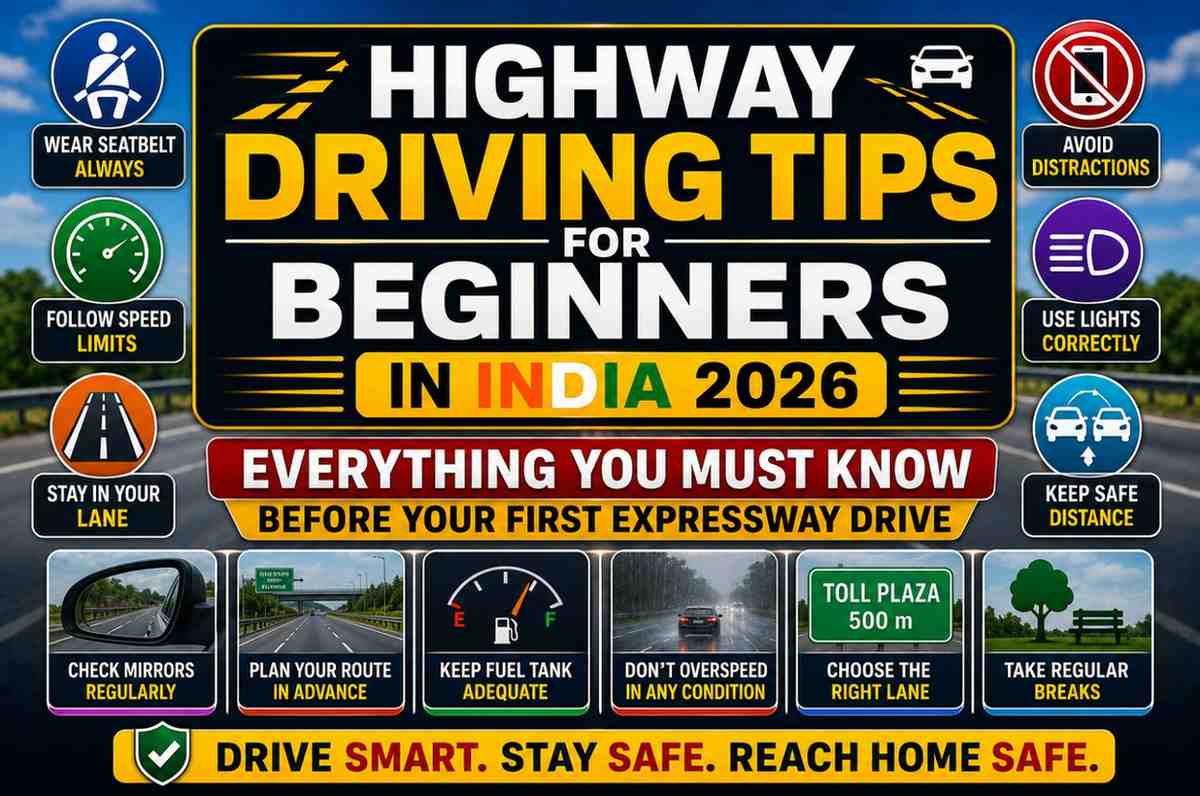
Your first expressway drive in India is exciting — and intimidating. Wide lanes, high speeds, heavy trucks, and rules that nobody taught you in driving school. That is exactly why highway driving tips for beginners India 2026 matter more now than ever. India’s expressway network has expanded dramatically, and millions of new drivers are hitting these roads every year without adequate preparation.
This complete guide on highway driving tips for beginners in India 2026 will walk you through everything—from pre-trip vehicle checks to lane discipline, FASTag usage, overtaking rules, emergency protocols, and fatigue management. Read it before you drive. Your safety depends on it.
Why Highway Driving in India Requires Specific Preparation
Highway driving in India is fundamentally different from city driving. On city roads, speeds rarely exceed 40–60 km/h, traffic is dense but slow, and mistakes have lower consequences. On Indian expressways and national highways, the same mistake at 100 km/h can be fatal.
Highway driving tips for beginners in India in 2026 are essential because:
- Speeds are 2–3x higher than city roads—reaction time becomes critical
- Lane discipline is mandatory—not just courteous
- Trucks and buses dominate the left lane and behave unpredictably
- Blind curves and underpasses appear suddenly on older national highways
- Fatigue is a genuine danger on drives longer than 3–4 hours
- Emergency protocols on highways differ completely from city breakdowns
Understanding these realities is the foundation of all highway driving tips for beginners in India 2026.
Part 1 — Before You Leave: Pre-Trip Checklist
The most overlooked highway driving tips for beginners in India in 2026 are the ones that happen before you even start the engine.
Vehicle Check (Non-Negotiable)
- Tire pressure—check all four tires plus the spare. Highway driving at 100 km/h with underinflated tires dramatically increases blowout risk. Correct pressure is printed on the driver’s door jamb sticker.
- Tyre tread depth — insert a ₹1 coin into the tread groove. If the outer rim of the coin is visible, tires need replacement before a highway trip.
- Engine oil level — check the dipstick. Low oil at high sustained speeds can seize your engine.
- Coolant level — especially important in Indian summer. Highway driving generates more heat than city driving.
- Brake fluid — if your brake pedal feels soft, get it checked before the highway.
- Fuel — fill up before the expressway. Petrol stations on expressways are spaced 20–40 km apart.
- Windshield — clean inside and out. Highway driving at 100+ km/h with a dirty windshield in afternoon sun creates dangerous glare.
Documents Check
- Driving license (carry physical copy—digital is accepted but physical is safer)
- Vehicle registration certificate (RC)
- Insurance certificate (valid, not expired)
- Pollution under control (PUC) certificate
- FASTag active and recharged (minimum ₹200 balance recommended)
Emergency Kit
Every beginner should have these in the car before a highway trip—and this is among the most important highway driving tips for beginners in India 2026:
- Reflective triangles or emergency road flares (2 minimum)
- Tyre inflator or tubeless puncture repair kit
- Jump starter (portable lithium jump starters cost ₹2,000–₹4,000 and are invaluable)
- Basic first-aid kit
- Torch and spare batteries
- Water (minimum 2 litres per person)
- Phone charger and power bank
Part 2—Lane Discipline: The Most Critical Highway Driving Tip for Beginners India 2026
Lane discipline is the single most important concept in all highway driving tips for beginners in India in 2026. On Indian expressways:
- Left lane—for slow vehicles, trucks, buses, tractors, and two-wheelers where allowed. If you are below 80 km/h, you should be here.
- Middle lane — for medium-speed traffic (80–100 km/h)
- Right lane (fast lane) — for overtaking ONLY. Return to the middle or left lane immediately after overtaking. Camping in the right lane is both dangerous and illegal.
This is the single biggest mistake beginners make. Driving slowly in the right lane while faster traffic builds up behind you is a leading cause of rear-end accidents and road rage incidents on Indian expressways.
The rule: Always drive as far left as your speed permits. Move right only to overtake. Return left immediately.
Part 3 — Speed Management on Indian Highways
Speed limits are not suggestions. They are engineering calculations based on the road’s design, sight distances, and stopping capabilities. Highway driving tips for beginners in India around 2026 speed:
| Road Type | General Speed Limit | Heavy Vehicle Limit |
|---|---|---|
| National Highway (4-lane) | 100 km/h (cars) | 80 km/h |
| Expressway (6-lane) | 120 km/h (cars) | 80 km/h |
| State Highway | 80–100 km/h | 60–80 km/h |
| Near toll plazas | 20 km/h | 20 km/h |
| Near emergency vehicles | Slow down and give way |
Beginner’s rule: Stay at 90–100 km/h on national highways until you are completely comfortable. There is no shame in not pushing to 120 km/h on your first few highway drives.
Part 4 — Overtaking Safely
Overtaking is where most highway accidents involving beginners occur. These highway driving tips for beginners in India 2026 on overtaking can save your life:
- Only overtake from the right—overtaking from the left is illegal in India
- Signal before every overtaking maneuver—right indicator on, hold it
- Check mirrors AND blind spots—glance over your right shoulder before moving right
- Never overtake on a curve, hill crest, or intersection—you cannot see oncoming traffic
- Maintain safe following distance—never tailgate a vehicle you are about to overtake
- Complete the overtake quickly—do not linger alongside the vehicle being overtaken
- Return left with left indicator—signal before returning to your original lane
Part 5 — FASTag and Toll Management
FASTag is mandatory on all Indian national highways. Highway driving tips for beginners India 2026 on FASTag:
- Keep minimum ₹200 balance before any highway trip
- Use the dedicated FASTag lane at toll plazas—do not use cash lanes
- Slow to under 20 km/h at toll barriers—barriers open within 2–4 seconds if FASTag balance is sufficient
- If your FASTag fails, use the hybrid or cash lane—never stop in a FASTag lane
- Check balance via your bank app, SMS balance enquiry, or the IHMCL app before departure
Part 6 — Highway Etiquette Every Beginner Must Follow
- Flash headlights = I am overtaking you; please hold your position — not aggression
- Hazard lights on a moving vehicle = danger ahead, slow down
- Slow down when a vehicle overtakes you—do not accelerate
- Give way to emergency vehicles—ambulance, police, fire—move left immediately
- Never reverse on a highway—even if you missed an exit. Drive to the next exit instead.
- Do not stop on the main carriageway—even for a phone call. Pull into a rest area or service lane.
Part 7 — Managing Fatigue on Long Drives
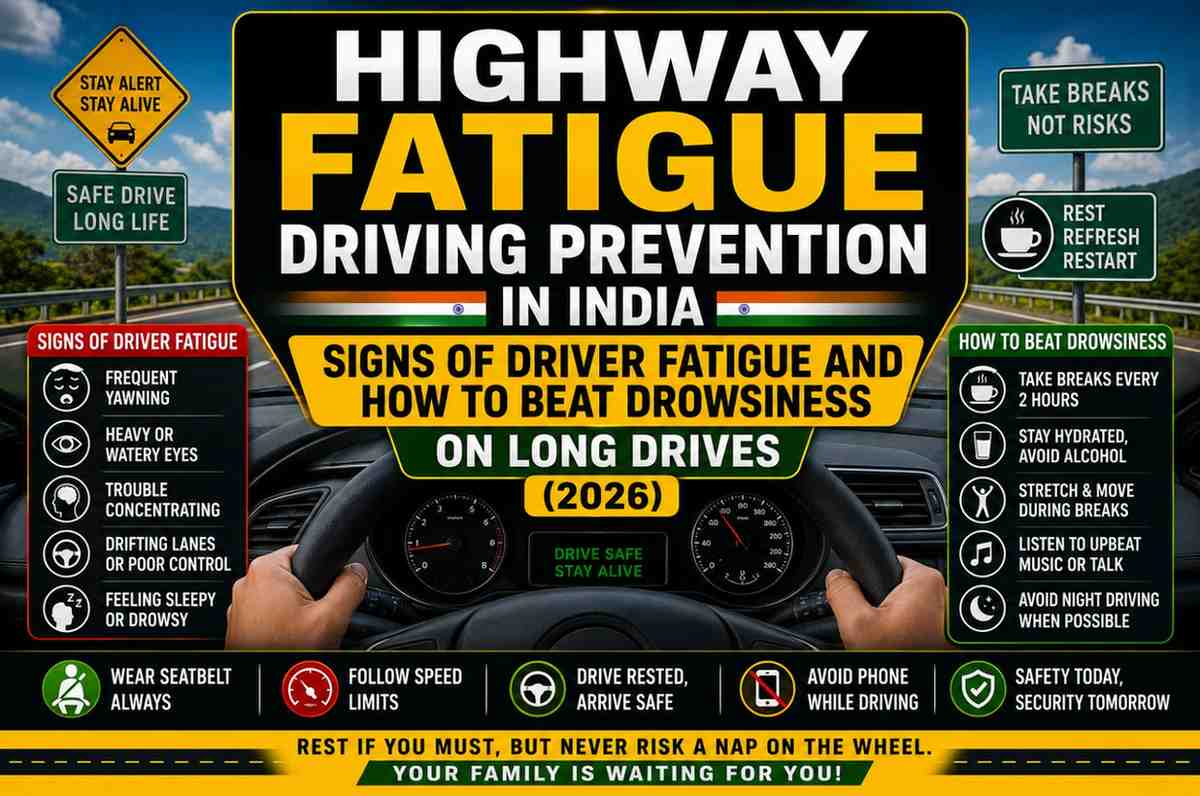
Fatigue is the invisible killer on Indian highways. Highway driving tips for beginners in India in 2026 on managing fatigue:
- Stop every 2 hours for at least 10–15 minutes
- Do not drive between 2am and 5am—this is when human alertness is naturally lowest
- Avoid heavy meals before driving—they trigger drowsiness
- If you feel sleepy—pull over immediately. No destination is worth your life.
- Coffee provides only 20–30 minutes of alertness—not a substitute for rest
FAQs — Highway Driving Tips for Beginners India 2026
Q1. What is the most important highway driving tip for beginners in India? Lane discipline—stay left unless overtaking. This single habit prevents the majority of expressway accidents involving beginner drivers.
Q2. What speed should a beginner drive at on Indian highways? 80–100 km/h is comfortable and safe for beginners on national highways. Avoid exceeding 100 km/h until you have at least 5–10 highway trips of experience.
Q3. Is FASTag mandatory for all vehicles on Indian highways in 2026? Yes. FASTag is mandatory on all national highways. Vehicles without a valid FASTag are charged double the toll at cash lanes.
Q4. What should I do if I miss my highway exit in India? Never reverse on a highway. Proceed to the next exit, take a U-turn or re-enter the highway, and return to the correct exit. The extra distance is a small price for your safety.
Q5. How do I handle a tire blowout on a highway? Do not brake suddenly. Grip the steering wheel firmly, keep the car straight, ease off the accelerator gradually, and steer gently to the road shoulder. Apply brakes only after speed has reduced significantly.
Conclusion
Highway driving tips for beginners in India in 2026 are not just traffic rules—they are survival knowledge. India’s highways are safer than ever in 2026, but they still demand respect, preparation, and discipline from every driver, especially beginners.
Prepare your vehicle. Know your lane rules. Drive at a comfortable speed. Use FASTag correctly. And never, ever drive when tired. Follow these highway driving tips for beginners in India 2026, and your first expressway drive will be the first of many safe, enjoyable ones.
Planning your first highway drive? Tell us your route in the comments, and drive safe!
Image Suggestions:
- Image 1 — After the introduction: A wide, clean Indian expressway with clear lane markings and light traffic, photographed from the driver’s perspective. ALT text: highway driving tips for beginners India 2026 — expressway view from driver’s seat
- Image 2 — After the Lane Discipline section: A bird’s-eye diagram showing correct lane usage on a 3-lane Indian expressway. ALT text: highway driving tips for beginners India 2026 — lane discipline diagram
External Links: