 admin@prodriver.in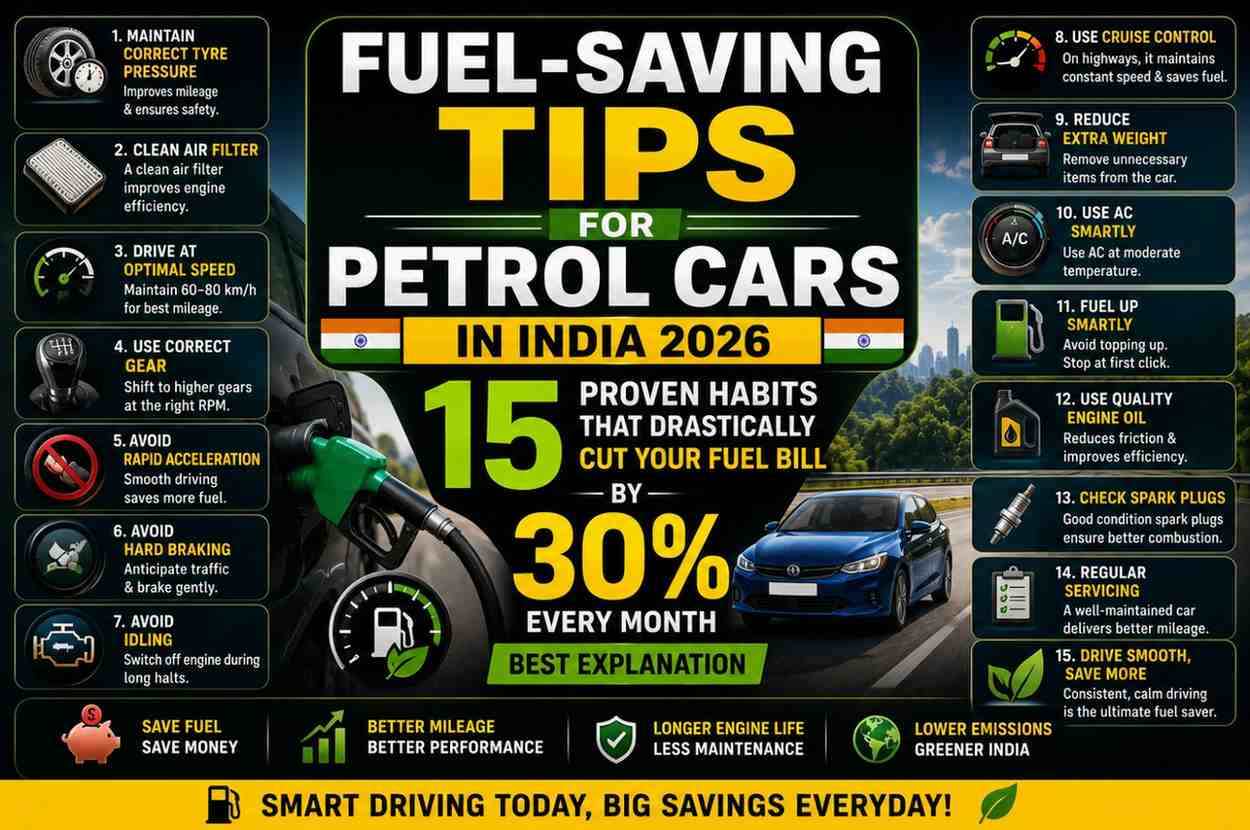
With petrol prices hovering between ₹94 and ₹106 per liter across major Indian cities in 2026, the monthly fuel bill for an average Indian car owner has become one of the most significant household expenses. The best fuel-saving tips for petrol cars in India 2026 that automotive experts are recommending are not about driving less—they are about driving smarter. And the impact is genuinely dramatic: consistent application of the right habits can cut your petrol consumption by 25–30% without spending a single rupee on modifications.
This guide covers every major fuel-saving tip for petrol car India 2026 drivers need to know—from tire pressure and engine warm-up to gear-shifting habits and route planning. Whether you drive a Maruti Swift in Bengaluru traffic or a Honda City on Mumbai’s expressways, these principles apply universally, and the savings are real.
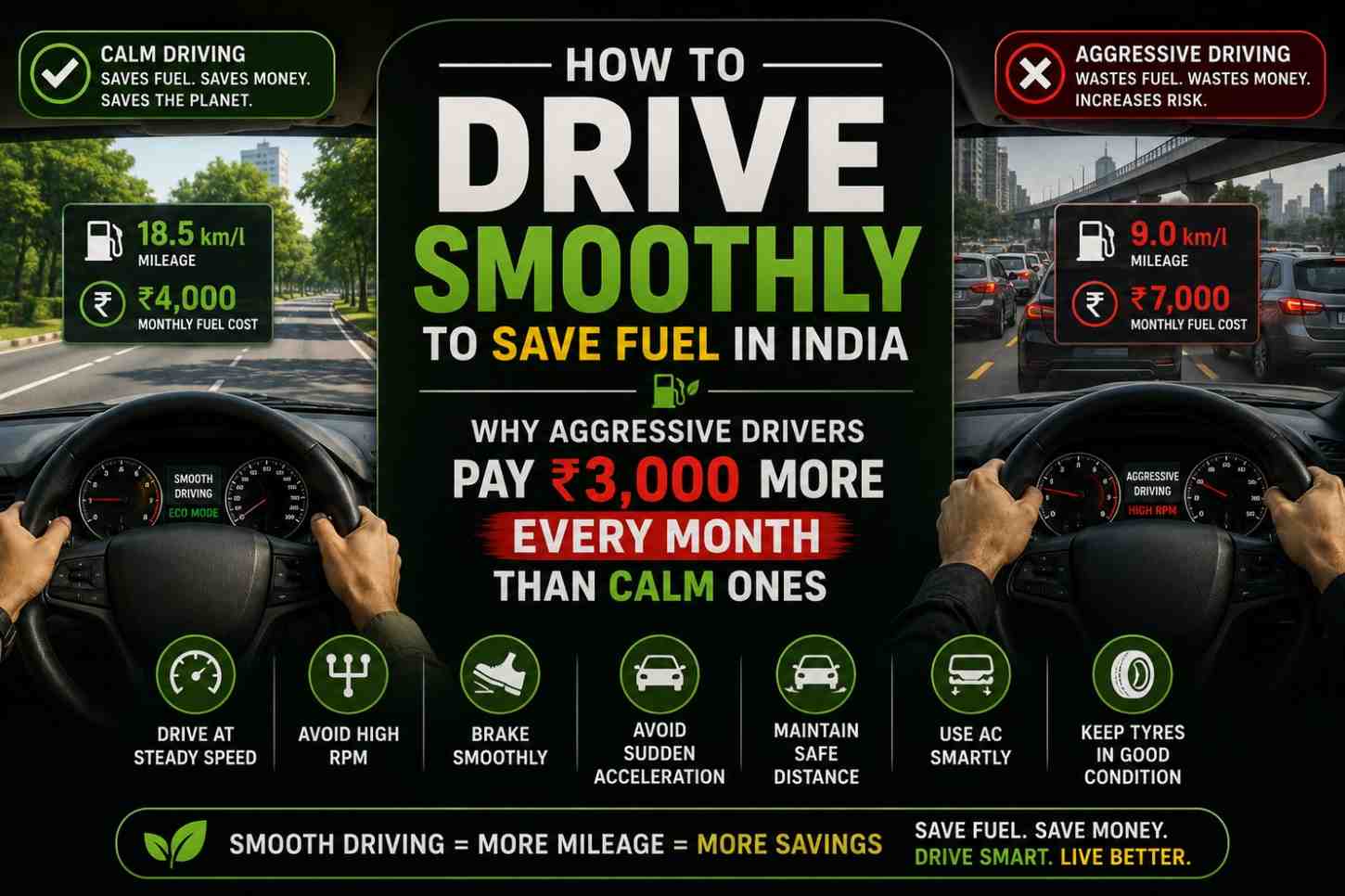
According to the Bureau of Energy Efficiency, Government of India, adopting efficient driving habits alone can improve fuel economy by 15–25% in typical Indian driving conditions. Combined with proper vehicle maintenance, the fuel-saving tips for petrol cars in India 2026 in this guide can realistically save you ₹1,500–₹3,500 every single month depending on your driving volume.
Why Fuel Efficiency Matters More Than Ever in India 2026
Petrol prices in India are deregulated and closely follow international crude oil prices. In 2026, with crude averaging $82–$88 per barrel, Indian motorists are paying more per liter than at any point in the previous decade in real terms. Applying fuel-saving tips for petrol cars in India in 2026 is no longer a matter of being frugal—it is financial common sense.
The average Indian car owner drives approximately 1,200–1,500 km per month. At ₹100/liter and a real-world mileage of 12 km/l, that is ₹10,000–₹12,500 in petrol every month. Improving efficiency by just 25%—which is entirely achievable with the fuel-saving tips for petrol cars in India 2026 in this guide—saves ₹2,500–₹3,125 monthly, or ₹30,000–₹37,500 annually.
15 Proven Fuel-Saving Tips for Petrol Cars in India 2026
Tip 1—Maintain the Correct Tyre Pressure at All Times
Underinflated tires are one of the single biggest sources of preventable fuel waste in Indian vehicles. Every 1 PSI drop in tire pressure reduces fuel economy by approximately 0.2%. Most Indian cars lose 1–2 PSI monthly naturally. Check and correct tire pressure every two weeks—this one fuel-saving tip for petrol cars in India in 2026 alone can improve your mileage by 3–5%.
Tip 2—Use the highest gear possible without laboring the engine.
Driving in higher gears at appropriate speeds reduces engine RPM dramatically, which cuts fuel consumption. On Indian city roads, shift to 4th gear above 40 km/h and 5th gear above 60 km/h whenever traffic conditions allow. Higher gear driving is one of the most impactful fuel-saving tips for petrol cars in India 2026 that automatic and manual drivers need to understand.
Tip 3 — Avoid Aggressive Acceleration and Hard Braking
Rapid acceleration from traffic signals consumes fuel at an extraordinary rate. Research from IIT Delhi shows that aggressive acceleration followed by hard braking wastes 22–37% more fuel than smooth, progressive driving. Learning to read traffic flow and accelerate gently is perhaps the most powerful fuel-saving tip for petrol cars in India in 2026 in terms of daily impact.
Tip 4 — Anticipate Traffic Flow and Maintain Rolling Momentum
Every time you stop your car completely, you spend fuel re-accelerating from zero. Skilled Indian drivers maintain momentum by anticipating signal changes, traffic gaps, and slowdowns well ahead. Keeping the car rolling at 5–15 km/h during slow traffic instead of repeatedly stopping and starting is a transformative fuel-saving tip for petrol cars in India in 2026 for city commuters.
Tip 5 — Switch Off the Engine During Stops Longer Than 60 Seconds
Modern petrol engines consume 0.5–0.7 liters per hour at idle. Railway crossings, long red lights, and traffic jams all drain fuel while producing zero forward movement. Switching off the engine for stops exceeding 60 seconds is a simple, damage-free fuel-saving tip for petrol cars in India in 2026 that adds up to significant savings across a month.
Tip 6 — Use Cruise Control on Highways
Speed variation is a hidden fuel thief. On National Highways, maintaining a constant speed of 80–90 km/h using cruise control delivers better fuel economy than manually varying speed by ±10 km/h repeatedly. If your car has cruise control, using it on highway stretches is a key fuel-saving tip for petrol car India 2026 highway drivers should adopt immediately.
Tip 7 — Reduce Unnecessary Weight in the Car
Every extra 50 kg of weight in your car increases fuel consumption by approximately 1–2%. Roof carriers, heavy boot loads, and unnecessary items carried daily all cost you money. Emptying your car of non-essential items is the simplest fuel-saving tip for petrol cars in India 2026 that requires no driving skill changes whatsoever.
Tip 8—Service Your Car on Schedule—Never Skip
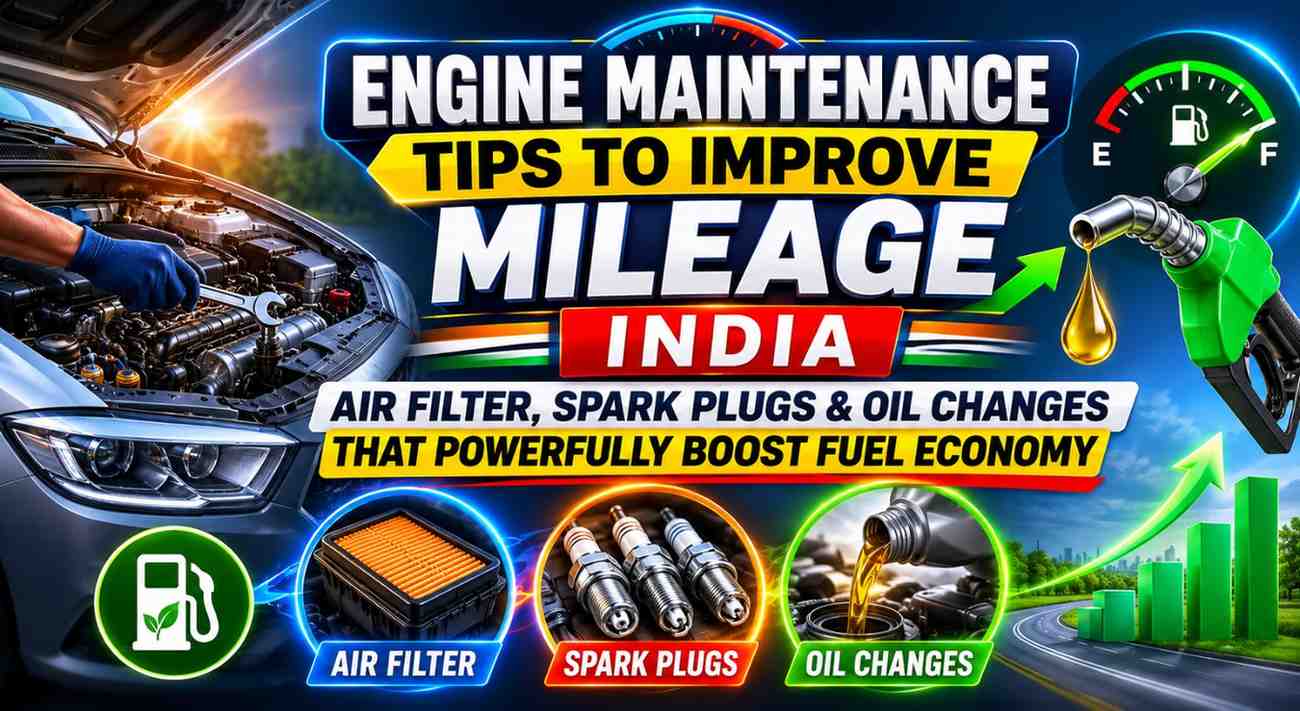
An engine running on dirty oil, a clogged air filter, or worn spark plugs consumes significantly more fuel to produce the same power output. Regular servicing at manufacturer-specified intervals is not optional—it is a foundational fuel-saving tip for petrol cars in India in 2026 that protects both your mileage and your engine’s longevity.
Tip 9 — Use the Correct Engine Oil Grade
Many Indian car owners use whatever oil is cheapest at the service center. Manufacturer-specified low-viscosity synthetic oils (e.g., 5W-30 instead of 20W-50 in modern engines) reduce internal friction and improve fuel economy by 1–3%. Specifying the right oil is a low-effort, high-return fuel-saving tip for petrol cars in India in 2026.
Tip 10 — Plan Your Routes to Avoid Peak Congestion
Stop-start city traffic is the most fuel-inefficient driving condition that exists. A 10 km journey in heavy peak-hour traffic may consume twice the fuel of the same distance in light traffic. Using Google Maps or Waze to route around congestion is an often-overlooked fuel-saving tip for petrol cars in India in 2026 that can make a substantial daily difference.
Tip 11—Minimize Air Conditioning Use at Low Speeds
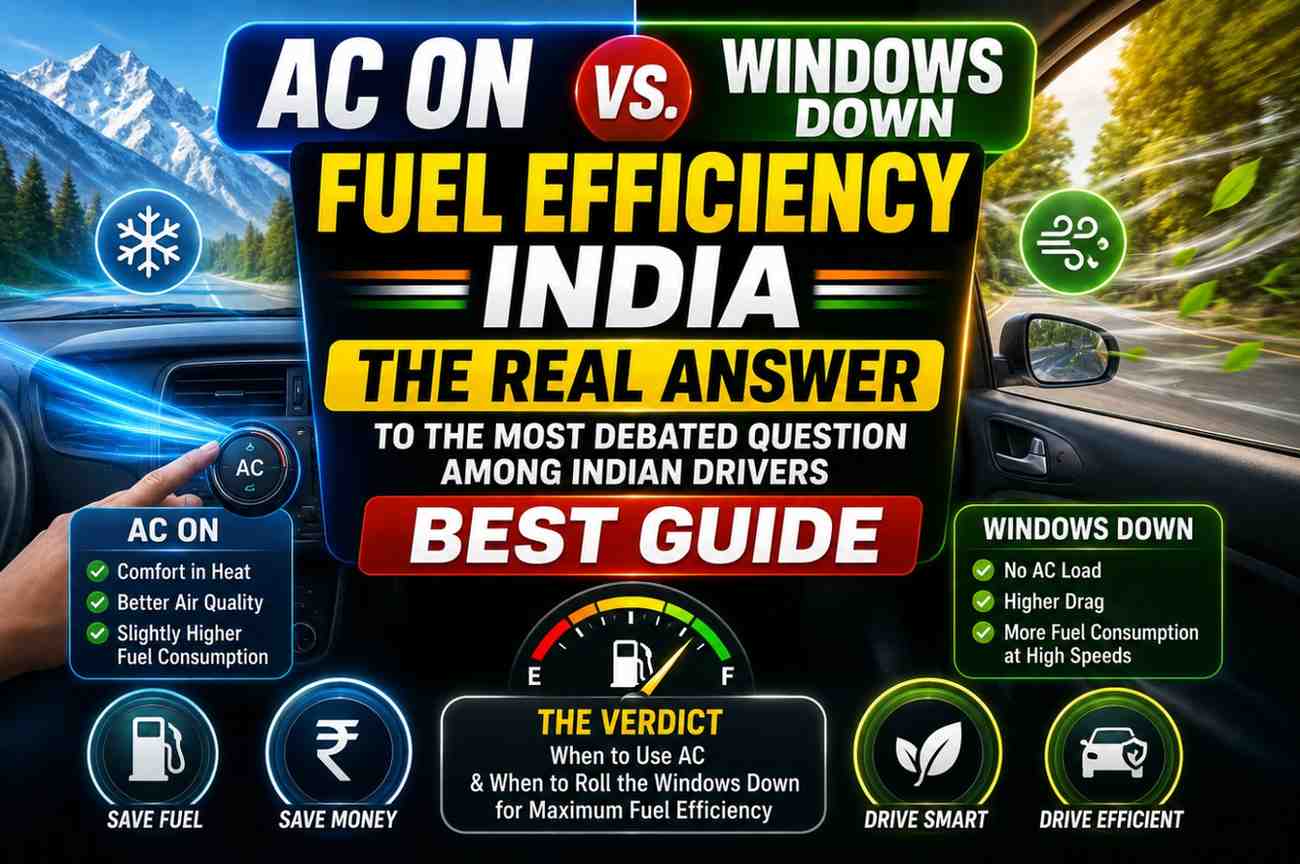
AC compressors add significant load to gasoline engines, reducing mileage by 8–15% depending on conditions. At speeds below 40 km/h in Indian city traffic, using windows down rather than the AC saves meaningful fuel. This is one of the most debated—and most confirmed—fuel-saving tips for petrol cars in India in 2026 in automotive research.
Tip 12 — Avoid Rooftop Carriers and Accessories That Increase Drag
Roof racks, spoilers not designed for your car, and large aftermarket accessories increase aerodynamic drag significantly. At highway speeds, drag increases with the square of velocity—meaning extra drag at 80 km/h costs far more fuel than at 40 km/h. Removing unnecessary accessories is a valid fuel-saving tip for petrol car India 2026 highway drivers should consider.
Tip 13 — Fuel Up in the Early Morning
Petrol is denser and contains more energy per litre at cooler temperatures. Fueling early in the morning before the day heats up means you get marginally more energy per liter dispensed. While the gain is small per visit, it is a zero-effort fuel-saving tip for petrol cars in India 2026 that costs nothing to implement.
Tip 14 — Keep Windows Closed at Highway Speeds
At speeds above 60 km/h, open windows create significant aerodynamic drag — equivalent to or greater than the fuel cost of running the AC. The crossover point in Indian highway conditions is approximately 65–70 km/h. Above this speed, closing windows and using AC are actually the better fuel-saving tips for petrol cars in India in 2026 for highway drivers.
Tip 15 — Track Your Fuel Economy Monthly
You cannot improve what you don’t measure. Use the trip meter to calculate your mileage at every fuel fill-up. Consistent tracking reveals the real-world impact of your driving habits and maintenance choices. This discipline of measurement is the meta-level fuel-saving tip for petrol cars in India 2026 that keeps all other habits on track.
How Much Can You Actually Save? A Monthly Calculation
| Driving Profile | Current Spend | After Tips Applied | Monthly Saving |
|---|---|---|---|
| City commuter, 1,000 km/month | ₹8,500 | ₹6,375 | ₹2,125 |
| Mixed highway, 1,500 km/month | ₹12,500 | ₹9,375 | ₹3,125 |
| Highway-heavy, 2,000 km/month | ₹16,000 | ₹12,000 | ₹4,000 |
Calculations based on ₹100/liter petrol, 12 km/l baseline, and 30% improvement from consistent application of fuel-saving tips for petrol cars in India in 2026.
Frequently Asked Questions
Q1. Which single habit saves the most fuel in Indian city driving? Smooth acceleration and anticipatory braking are consistently the highest-impact individual fuel-saving tips for petrol cars in India in 2026 for city drivers, saving 20–37% fuel over aggressive driving styles on the same route.
Q2. Does premium petrol give better mileage in Indian cars? For most Indian cars with compression ratios designed for regular petrol (87–91 RON), premium petrol offers no significant mileage benefit. Save the premium price difference. This is an important fuel-saving tip for petrol cars in India 2026 that saves money directly at the pump.
Q3. How often should tire pressure be checked for best fuel economy? Every two weeks, or before any long highway journey. Tire pressure is the fastest-decaying factor in fuel economy—and the quickest fix. It is the foundation of every fuel-saving tip for the petrol car India 2026 maintenance checklist.
Q4. Does engine idling damage the car if switched off frequently? Modern fuel-injected petrol engines—all Indian cars sold since approximately 2010—are designed to handle frequent start-stop cycles without damage. Many now come with factory-fitted idle-stop systems. Switching off at long stops is a safe and effective fuel-saving tip for petrol cars in India 2026.
Q5. What is the ideal speed for best fuel economy on Indian highways? 60–80 km/h is the sweet spot for most Indian petrol cars. Above 80 km/h, aerodynamic drag rises sharply and fuel economy deteriorates. Maintaining 70–80 km/h on open highways is the definitive fuel-saving tip for petrol cars in India 2026 highway speed advice.
Conclusion
The 15 fuel-saving tips for petrol cars in India 2026 in this guide are not theories—they are proven, measurable, and immediately actionable. The cumulative impact of applying all 15 consistently is a 25–30% reduction in your monthly petrol bill, which for the average Indian driver means saving ₹2,500–₹4,000 every single month.
You don’t need a new car. You don’t need expensive modifications. The fuel-saving tips for petrol cars in India 2026 that deliver the biggest results—smooth driving, correct tire pressure, higher gears, and planned routes—cost nothing to implement and begin delivering savings from the very first drive. Start with three habits this week and build from there.