 admin@prodriver.in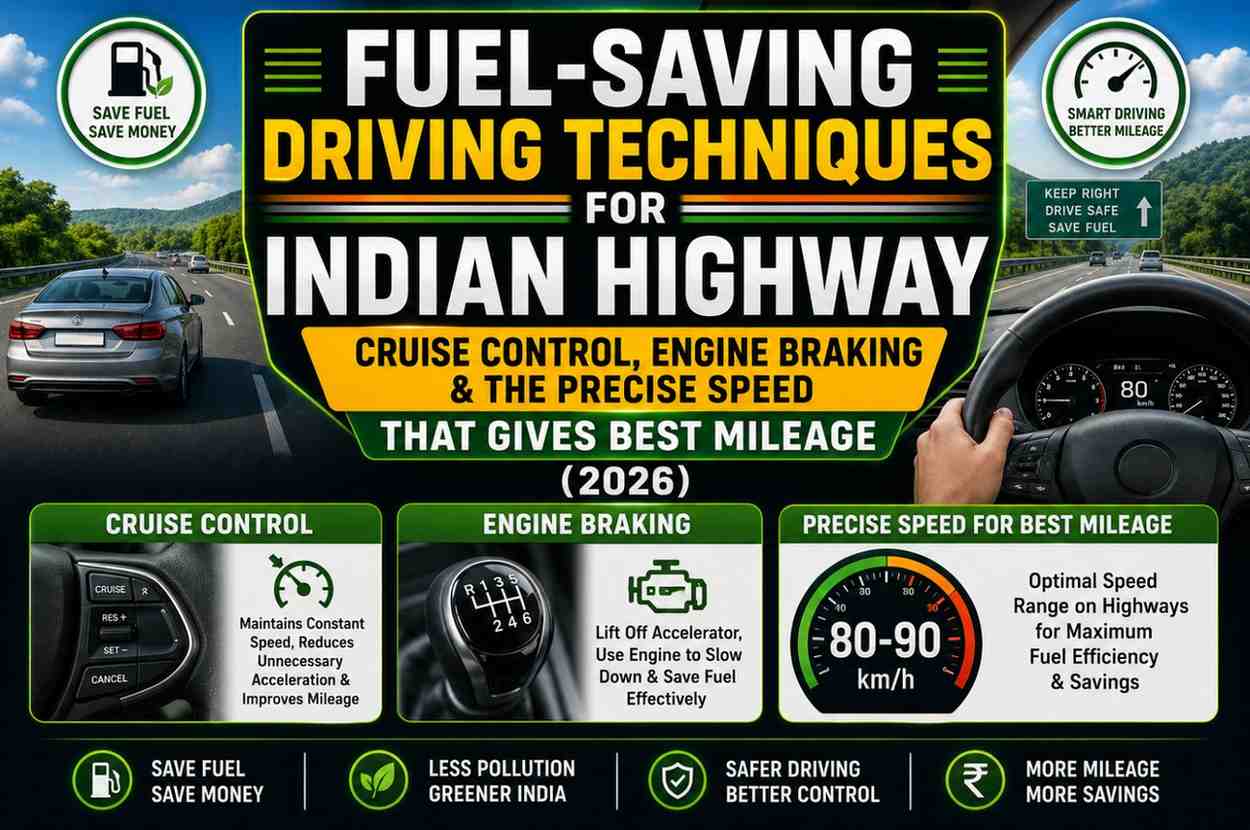
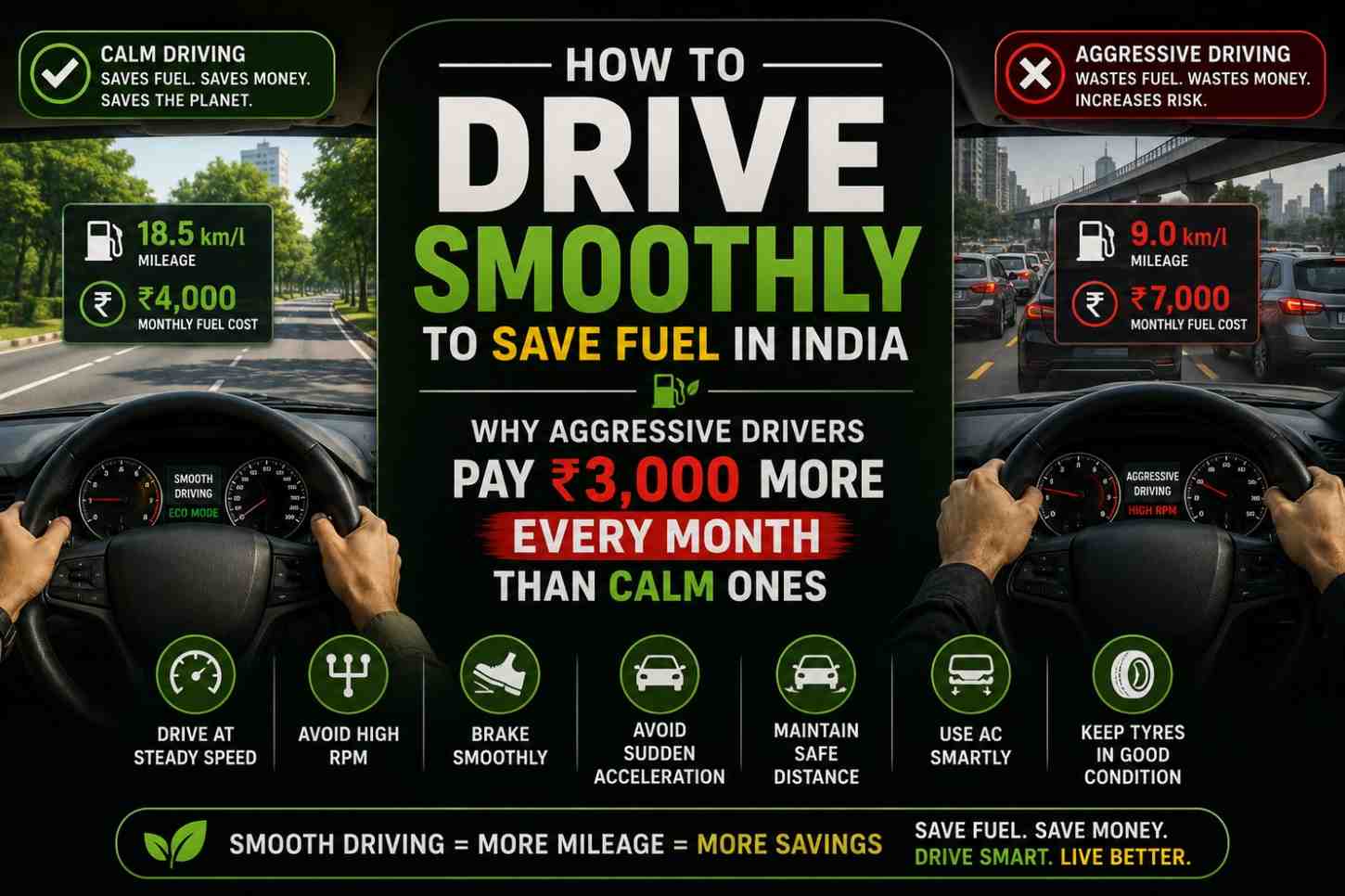
Highway driving should be India’s most fuel-efficient motoring condition—smooth roads, consistent speeds, and minimal stops. Yet most Indian highway drivers are leaving enormous fuel efficiency gains on the table through avoidable habits: excessive speed, poor overtaking techniques, unnecessary braking on descents, and cruise control misuse. Mastering fuel-saving driving techniques for Indian highway journeys can realistically improve your highway fuel economy by 20–30%.
The physics of highway fuel consumption are different from those of city driving. Aerodynamic drag — which increases with the square of speed — becomes the dominant force above 60 km/h. This means that fuel-saving driving techniques that India highway experts recommend are fundamentally about managing speed and maintaining aerodynamic efficiency, rather than the stop-start momentum management that governs city efficiency.
According to India’s Ministry of Road Transport and Highways, highway fuel consumption accounts for the majority of India’s total road transport petroleum use. Even a 10% efficiency improvement across India’s highway-driving fleet would save billions of liters of fuel annually—and fuel-saving driving techniques‘ adoption in India’s highways at scale could deliver exactly that.
The Speed-Efficiency Relationship: The Foundation of Fuel-Saving Driving Techniques India’s Highways
The single most important piece of knowledge in fuel-saving driving techniques in India’s highway guides is the relationship between speed and fuel consumption. For most Indian passenger cars:
| Speed | Approximate Fuel Economy | Notes |
|---|---|---|
| 50 km/h | Good but suboptimal | Engine too low in power band |
| 60 km/h | Near-optimal for most cars | Best for older vehicles |
| 70–80 km/h | Optimal zone for most Indian cars | Best mileage window |
| 90 km/h | 8–12% worse than 80 km/h | Drag rising sharply |
| 100 km/h | 18–25% worse than 80 km/h | Major efficiency penalty |
| 120 km/h | 35–50% worse than 80 km/h | Dramatic fuel waste |
The clearest fuel-saving driving technique India highway recommendation: maintain 70–80 km/h wherever road and traffic conditions safely allow.
10 Expert Fuel-Saving Driving Techniques for Indian Highways
Technique 1 — Use Cruise Control on Every Suitable Stretch
Speed variation is a silent fuel thief. A car oscillating between 85 and 100 km/h repeatedly consumes significantly more fuel than one holding a steady 90 km/h. Cruise control eliminates this variation entirely. Using cruise control on open NH stretches is the single most impactful fuel-saving driving technique Indian highway experts recommend for cars equipped with it.
Technique 2 — Master Engine Braking on Descents
When approaching a descent or a predictable deceleration on Indian highways (toll plazas, overtaking completion, approaching towns), shift down progressively and remove your foot from the accelerator. In fuel-injected engines, closed-throttle engine braking cuts fuel delivery to near-zero—far more efficient than using the brake with the engine on throttle. This is a core fuel-saving driving technique on Indian highways that experienced drivers use constantly.
Technique 3 — Plan Overtaking Manoeuvres Strategically
Aggressive overtaking — accelerating hard to 110–120 km/h to pass a truck, then immediately braking back to 80 km/h — is extraordinarily fuel-intensive. The efficient fuel-saving driving technique India highway approach: accelerate to overtaking speed gradually (6–8 seconds), complete the pass, and return to cruising speed with a smooth, closed-throttle coast rather than hard braking.
Technique 4 — Use Descents to Build Speed, Then Coast Up Inclines
Skilled Indian highway drivers use topography. On an approaching downslope before an incline, allow the car to naturally accelerate from gravity, then maintain momentum up the following rise with a partially closed throttle rather than flooring the accelerator. This fuel-saving driving technique, the Indian highway technique, is sometimes called “pulse and glide” and can improve highway mileage by 5–10%.
Technique 5—Avoid the Slip-stream Danger Zone
Drafting close behind trucks to reduce aerodynamic drag is a technique used in motorsports and by some Indian highway drivers—but the safety margin is dangerously insufficient at highway speeds. Instead, maintain a safe 3–4 second following distance and allow the truck’s wake to mildly reduce frontal wind resistance at range. Safe distance is always the priority in every fuel-saving driving technique India’s highway strategy.
Technique 6 — Minimize AC Use During the Early Morning or Late Evening
Highway AC loads are lower than city loads (faster airflow through the condenser improves efficiency) but still add 5–8% fuel consumption. On Indian highway night or early-morning drives when temperatures are below 28°C, switching off AC and using ram air through the vents is an effective fuel-saving driving technique in India for comfortable temperature ranges.
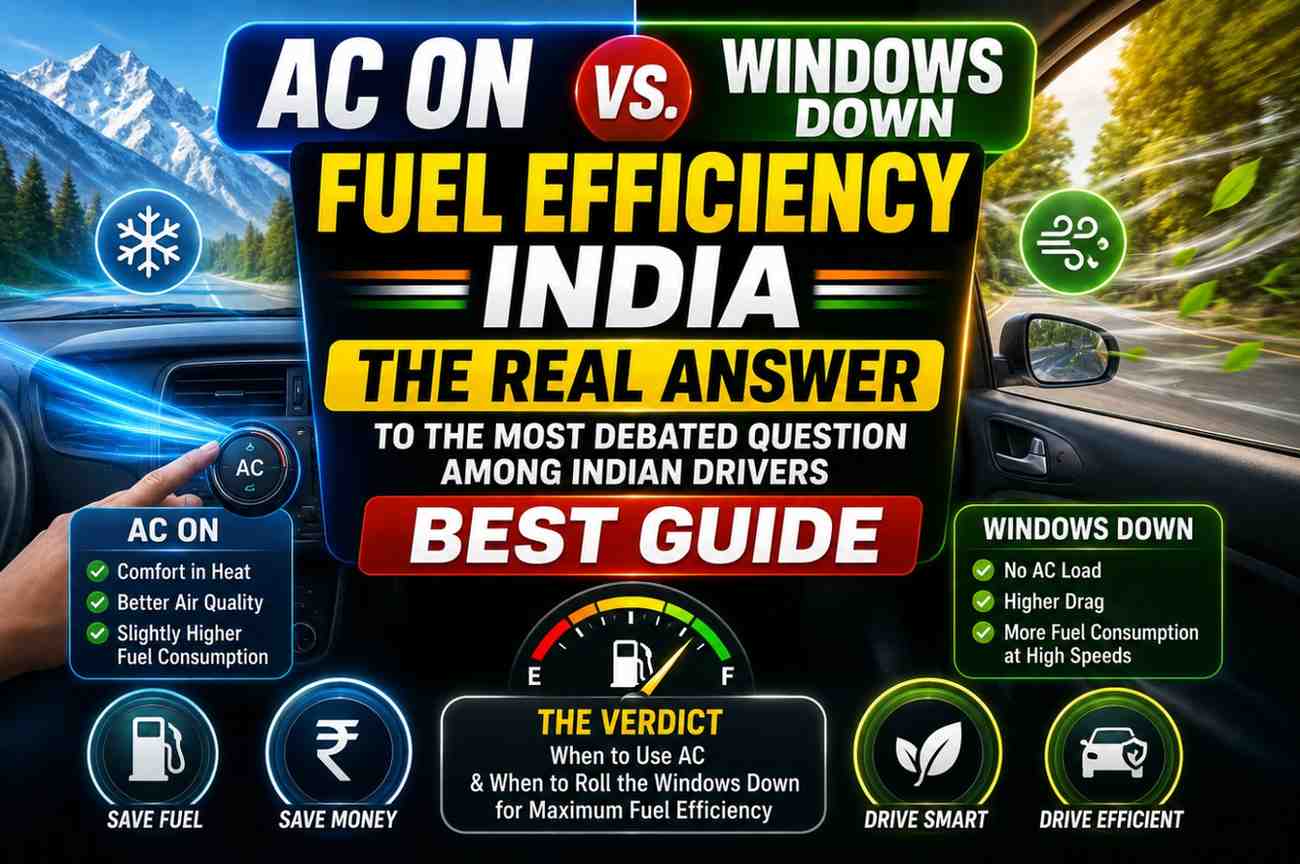
Technique 7 — Close All Windows at Highway Speed
As discussed in Article 1, at speeds above 65–70 km/h, open windows create more aerodynamic drag than the equivalent AC fuel cost. On Indian highways where sustained speeds above 70 km/h are common, keeping all windows closed is a confirmed fuel-saving driving technique on Indian highways—counterintuitive but scientifically validated.
Technique 8 — Keep the Boot and Roof Clear
Roof-mounted luggage dramatically increases aerodynamic drag at highway speeds. A rooftop carrier adds 10–25% to highway fuel consumption depending on shape and load. Loading luggage in the boot rather than on the roof is a straightforward fuel-saving driving technique in India for highway road trips and long-distance travel.
Technique 9 — Shift Up to the Highest Gear Early
On Indian national highways, many drivers travel in 4th gear at speeds where 5th gear is perfectly appropriate. For 5-speed manual cars, 5th gear at 70–80 km/h lowers RPM, reduces engine load, and improves mileage by 5–8% compared to 4th gear at the same speed. Fuel-saving driving techniques in India’s highways always prioritize the highest appropriate gear.
Technique 10—Take Toll Breaks Strategically
At toll plazas, switching off the engine while waiting (if the queue is more than 4–5 cars deep) and rolling forward slowly saves meaningful fuel on long highway journeys with multiple tolls. Using FASTag to reduce stop duration is the modern fuel-saving driving technique in India’s highway toll management strategy.
Frequently Asked Questions
Q1. What is the best speed for highway mileage in Indian cars? 70–80 km/h is the consistent sweet spot for most Indian passenger cars. This is the core fuel-saving driving technique India’s highway speed recommendation — above 80 km/h, mileage deteriorates rapidly with every additional 10 km/h.
Q2. Does cruise control work on Indian highways with their variable conditions? Cruise control is most effective on long, straight NH stretches with predictable traffic. On ghat roads, winding highways, or sections with frequent trucks and two-wheelers, manual throttle management is safer and actually allows better fuel-saving driving techniques using India’s highway topography.
Q3. How much fuel is wasted driving at 120 km/h versus 80 km/h? Approximately 35–50% more fuel is consumed at 120 km/h than at 80 km/h for the same distance. This is one of the most dramatic illustrations of fuel-saving driving techniques on Indian highways—physics—and a compelling reason to stay near the 80 km/h mark.
Q4. Is it safe to switch off the engine on highway downslopes? No. In most modern cars, switching off the engine disables power steering and significantly degrades vacuum-assisted braking. Fuel-saving driving techniques on Indian highways should never compromise vehicle control. Engine braking in a low gear with the engine running is always the correct downslope technique.
Q5. How much can highway fuel economy be improved with these techniques? Consistent application of fuel-saving driving techniques on Indian highways, as described in this guide, delivers a 15–30% improvement for most Indian drivers. On a Bengaluru-to-Goa or Mumbai-to-Pune drive, that translates to 4–8 liters saved—₹400–₹800 per long-distance journey.
Conclusion
Fuel-saving driving techniques India highway journeys’ rewards are not about sacrificing time or comfort—they are about understanding the physics of high-speed driving and working with them rather than against them. Maintaining 70–80 km/h with cruise control, mastering engine braking on descents, planning overtaking smoothly, and keeping the car aerodynamically clean are all techniques that make you a better, safer, and more economical highway driver simultaneously.
Apply these fuel-saving driving techniques. India highway guides recommend it on your next road trip, and the fuel savings will be immediately visible in your per-liter mileage calculation. The highway is where the biggest single-journey savings live—make the most of every kilometer.